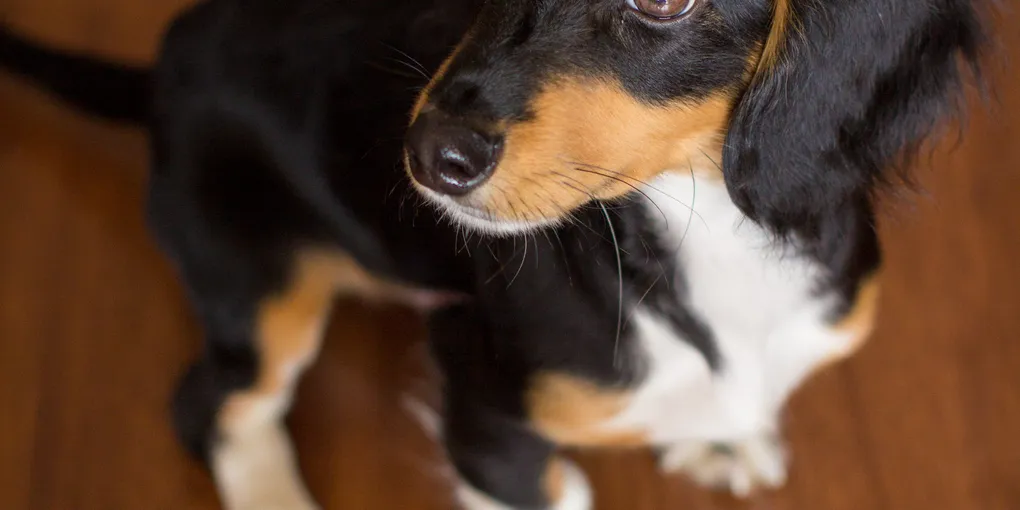
Dachshund Back Problems: How to Prevent IVDD (and What to Do If It Happens)
1 in 4 Dachshunds develops IVDD. Milo is 11 and still mobile because of these rules. Here's the full prevention protocol, plus the warning signs every Dachshund owner needs to know.

Milo is 11 years old. He’s a 15-pound Dachshund. He should statistically have IVDD by now. He doesn’t.
That’s not luck. It’s the result of a strict prevention protocol we’ve followed since he was a year old. We’ve also been to the emergency vet twice with friends’ Dachshunds who went down overnight from IVDD, and watched both of them go through weeks of crate rest and one through $7,000 of surgery.
If you have a Dachshund, or a Corgi, or a Basset Hound, or any other long-backed breed, this guide is for you.
What IVDD actually is
Dachshunds have a normal-length spine compressed into a small body. Their intervertebral discs (the shock-absorbing pads between vertebrae) are under more stress per square inch than any other breed.
There are two types of IVDD:
Type I (Hansen Type I): the disc material calcifies and ruptures suddenly. Usually triggered by a specific event (jumping off a couch, going down stairs, rough play). Affects ages 3-7 most commonly. Dachshunds are 12.5x more likely than average breeds.
Type II (Hansen Type II): gradual degeneration over years. Affects older dogs.
Both cause the disc to press on the spinal cord, which can range from mild back pain to complete paralysis. The window to catch it and treat it surgically is 24-72 hours from when symptoms start.
The prevention protocol that’s worked for Milo
1. Keep them lean (the single biggest factor)
A Dachshund 1 pound overweight has 3x the spinal load of a healthy-weight Dachshund. A Dachshund 2 pounds overweight has 5-7x the load.
Milo’s ideal weight: 15 lb. Anything over 16 and we cut his food back immediately.
How to know if your Dachshund is overweight:
- Run your hands along their ribs. You should feel them with light pressure (like a washboard). If you have to dig, they’re overweight.
- Look down at them from above. You should see a clear waist between the ribs and hips. No waist = overweight.
- Profile view: belly should slope upward from chest to hips. Flat or sagging belly = overweight.
For specific feeding guidance for older Dachshunds, see my senior Dachshund food guide.
2. No jumping off furniture, ever
This is the most common IVDD trigger by a wide margin.
Block the couch when you’re not home. Train them to wait at the edge for a lift. We use a simple “wait” command with a treat. Took Milo about two weeks to fully learn.
For climbing up, use a low-incline dog ramp. Not stairs. Ramps distribute the load across distance. Stairs concentrate it on each landing.
3. Ramp for the car too
The 18-24 inch drop from an SUV or truck is brutal on a Dachshund spine. A folding car ramp costs $40-80 and you’ll use it every single ride.
4. Support their body when you pick them up
The wrong way: hand under the belly, lift. This bends the spine and creates a pivot point that can rupture a disc.
The right way: one hand under the chest, one hand under the rear, lift level so the spine stays straight. Like picking up a loaf of bread.
Teach everyone in your house. Teach the dog walker. Teach kids.
5. No rough play with bigger dogs
Tank (65 lb pit mix) is forbidden from playing with Milo. Not because he’d be aggressive, but because a single accidental shoulder check from a much bigger dog can fracture or compress a Dachshund’s spine.
Supervised parallel play (sniffing, walking together) is fine. Wrestling, chasing, body-slamming is not.
6. Avoid stairs as much as possible
Yes, even regular house stairs. A young, healthy Dachshund can manage a couple of trips up and down per day. An older Dachshund or one with any history of back issues should not be doing stairs at all.
Solutions:
- Carry them up and down at the same time you go
- Use a pet gate to block stair access
- Use ramps everywhere ramps make sense
7. Build their core strength (gently)
Strong abdominal and back muscles support the spine. Activities that build core strength safely:
- Walking on uneven terrain (grass, sand, gentle hills, NOT cement)
- Swimming (the safest possible exercise for a Dachshund)
- Slow leash walks of 20-30 minutes daily
- Avoid: long runs, repetitive fetch, jumping for toys, tug-of-war
8. Watch for the early signs
The earlier you catch IVDD, the better the outcome. Symptoms to watch for daily:
- Suddenly reluctant to jump up or climb steps they normally do
- Hunched back posture (like an arched cat)
- Shivering or trembling for no reason
- Yelping when you pick them up or touch their back
- Walking with their back end wobbly or dragging
- Refusal to eat (pain often shows as anorexia in Dachshunds)
- Wagging the tail less, or holding it lower than usual
If you see any of these, go to a vet within 24 hours. Not next week. Today. The window for medical (non-surgical) recovery closes fast.
What to do if your Dachshund shows IVDD symptoms
The 5-minute decision tree:
Can they walk normally? → vet appointment within 24 hours, restrict activity completely until then.
Can they walk but it’s wobbly? → emergency vet within 4 hours.
They can’t walk? → emergency vet immediately. Cradle them flat (no flexing the spine) for transport. This is genuine emergency-level urgency.
What to expect at the vet:
- Physical exam to localize the pain
- Possibly X-rays (less useful for IVDD specifically but helps rule out fractures)
- MRI if surgery is being considered ($1,500-3,000)
- Two paths from there: conservative management (crate rest + steroids + pain meds, 4-6 weeks) OR surgical decompression ($5,000-10,000)
The decision between surgery and crate rest depends on the severity. Mild to moderate IVDD often resolves with strict rest. Severe IVDD (no deep pain perception in the legs) needs surgery within 24-48 hours for the best outcome.
Pet insurance: get it before they’re 2 years old
For Dachshund owners, pet insurance is not optional. It’s the cheapest way to avoid the impossible “spend $7,000 or put down your dog” decision.
Look for plans that:
- Cover hereditary conditions (most do, but verify IVDD specifically is covered)
- No exclusions for “pre-existing conditions” (sign up before any back issues appear)
- Cover surgery, MRI, post-op rehab
Typical cost: $30-60/month for a healthy young Dachshund.
What to skip (doesn’t work)
- Glucosamine supplements for IVDD prevention. They help joints, not discs. Save your money or give them to senior dogs for joint health, not as IVDD prevention.
- “Back support harnesses” for daily wear. Adds heat and irritation. Doesn’t prevent disc damage. Skip unless your vet specifically recommends one for a specific condition.
- Dog stairs (sets of pet stairs). Better than jumping, way worse than ramps. The repeated vertical movement on small steps still loads the spine.
The honest reality
Despite doing everything right, some Dachshunds will still develop IVDD. The genetic risk is real and you can’t eliminate it. What you can do:
- Cut the risk by 40-60% with consistent prevention
- Catch it early when it does happen (mild cases resolve in weeks with rest)
- Have insurance so the financial decision doesn’t drive the medical decision
Milo is 11. He’s slowing down. His back is still good. We continue to be careful, and we’ll continue to be careful for whatever time he has left. That’s the deal you sign when you adopt a Dachshund.
Related reading:
- Best food for senior Dachshunds with bad teeth
- Why does my dog scoot on the floor (related: spinal issues can present this way)
- Why is my dog shaking?
- Best gear for Dachshunds
Frequently Asked Questions
The real questions I get from other dog dads.
What is IVDD in Dachshunds?
What are the early warning signs of IVDD in Dachshunds?
Can I prevent IVDD in my Dachshund?
Are ramps and stairs better for Dachshunds?
Should I let my Dachshund jump on furniture?
Sunday letter
One honest review. Every Sunday.
Plus the occasional photo of Rex destroying something he wasn't supposed to. About 400 words. Skip a week and I'll understand.
Disclosure: The Dog Dad Guide is a participant in the Amazon Services LLC Associates Program, an affiliate advertising program designed to provide a means for sites to earn advertising fees by advertising and linking to Amazon.com. As an Amazon Associate we earn from qualifying purchases, at no extra cost to you.
More Health & Wellness Guides
When Do Puppies Calm Down? The Honest Timeline (Breed by Breed)
Spoiler: not as early as you'd hope. Here's the real age-by-age timeline of when puppies actually mellow out, what changes when, and the trick that makes the wild months easier.
Border Collie Training: The 12 Things That Actually Worked (and Five That Didn't)
Border Collies aren't dogs. They're four-legged employees with a job description you have to write. Here's the training approach that works for the smartest breed alive.

Slow Feeder Bowl vs Puzzle Feeder: Which One Does Your Dog Actually Need?
Both slow down eating. Both cost about the same. They solve totally different problems. Here's exactly which one to buy based on your dog's specific issue.