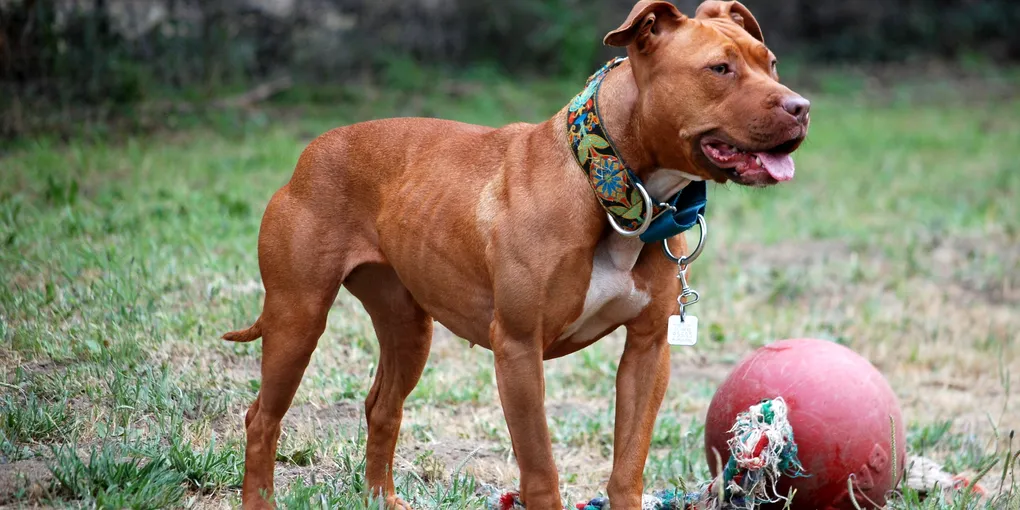
Why Is My Pit Bull So Anxious in the Car? (What Finally Worked for Tank)
Tank shook, panted, drooled, and peed in my truck for 18 months. Here's everything I tried, what failed, and the 4 things that finally broke the pattern.

Month 1: Tank shakes so hard his tags rattle like a tambourine. Drool soaks the seat cover. Pees twice on a 15-minute drive. Refuses to jump out when we arrive.
Month 20: Tank sees the keys, hits the door, and tries to open the truck himself. The same dog. Same truck. Same human.
What changed? Everything I’m about to tell you. It wasn’t one magic fix. It was four overlapping interventions that slowly rewired his brain. If your pit bull turns into a 65-pound puddle the moment you open the car door, this is for you.
Did You Know?
Roughly 1 in 3 dogs has some form of travel anxiety or motion sickness. For rescue dogs, that number is closer to 1 in 2. Because the car is often linked in their memory to leaving the only home they knew.
First, rule out motion sickness
Anxiety and motion sickness get blurred together because they look identical: drooling, panting, whining, vomiting. But the fix is different.
Here’s the quick test I use: put your dog in the car without turning it on. Sit there for 5 minutes. If they’re shaking and panting before the engine starts, it’s anxiety. If they’re fine until the car moves and symptoms kick in within 2-3 minutes of driving, it’s motion sickness (often both).
With Tank, it was both. The parked-car test: he was nervous but stable. The moment I put it in gear, he melted down within 90 seconds.
The motion sickness half
Dogs get carsick the same way kids do. Inner ear confusion. Puppies are especially prone because their vestibular system isn’t fully developed. Most outgrow it, but breeds with shorter muzzles (including some pit mixes) can stay sensitive.
What helped Tank:
- Face forward, not sideways. I put a crash-tested car harness on him that clips into the seatbelt and keeps him facing forward. Huge difference on its own.
- Cracked window airflow. Just an inch. Fresh air changes pressure inside the cabin and helps with the inner-ear thing.
- Empty stomach. No food within 3 hours of a drive. This alone cut his drooling by 60%.
- Ginger treats. I make my own using organic ginger powder, but calming dog treats with ginger and chamomile also work.
The four things that broke Tank’s anxiety pattern
1. Desensitization (the unsexy one that actually works)
This is the one everyone skips because it’s boring and takes months. It’s also the only thing that changes the underlying association.
Week 1: Open the truck door. Toss a treat on the floorboard. Let Tank get in, grab the treat, get out. Do not turn the car on. Do this 3-4 times, then stop.
Week 2: Same thing, but close the door for 10 seconds after he’s in. Treat. Open. Let him jump out.
Week 3: Door closed. Engine on. Don’t drive. Treat. Engine off. Door open.
Week 4: Drive to the end of the driveway. Stop. Treat. Drive back.
Week 5-8: Drive somewhere fun every time. The dog park. A trail. A pet store where employees give treats. Never the vet. Never the groomer. Every single car ride ends somewhere good for two straight months.
That’s the whole game. By month 2, Tank’s first-30-seconds-of-driving meltdown was gone. By month 4, he was calm for full 20-minute drives.
"Tank figured out pretty quickly that if he got in the truck calmly, we went to the park. If he melted down, we just sat in the driveway. The dog is not dumb. He chose the park."
— Tank's Dad
2. A proper car setup (not just a seatbelt)
This was the biggest physical change. For the first year I had Tank loose in the back seat, and every turn threw him around, which reinforced his fear that cars were dangerous.
What finally worked for us:
A rear bench hammock, not a booster, an actual hammock-style car seat cover that creates a wall between the front and back seats. This does two things: it prevents the dog from sliding into the footwell on braking, AND it makes the back a cozier den instead of a giant scary space. For full coverage options, see my full car seat cover review.
A crash-tested harness attached to the seatbelt. Critical. A loose dog is an unsafe dog and also a more anxious one.
A familiar blanket in the back seat. Tank has one blanket that lives in the truck. It smells like home. The smell alone dropped his heart rate (I could feel it against the harness).
3. The ThunderShirt + music combination
I was skeptical. My wife was a believer. She was right, I was wrong.
A ThunderShirt applies gentle constant pressure, like a weighted blanket for dogs. It works through something called deep touch pressure, which is the same thing that calms autistic kids and panicking humans. Not all dogs respond. About 80% do. Tank responded.
The key is putting it on 15 minutes before the car. Not as he’s already shaking in the driveway. By the time he gets in the truck, the jacket has already taken effect. You can put it on in the kitchen while you’re getting ready to leave.
Combined with calming music (there’s an entire genre called “Through A Dog’s Ear”, seriously, it’s on Spotify), we got another 30% drop in symptoms.
4. A short-term med (for long drives only)
For rides over 45 minutes, or to the vet, I got a vet prescription for trazodone, a situational anti-anxiety med. Given 90 minutes before the drive. One dose. Non-habit-forming. No personality change. He’s just Tank, but less scared.
This is not a daily solution. It’s for specific high-stress events. I used it maybe 8 times total during the retraining process. The desensitization did most of the work; trazodone was just for the moments when I couldn’t afford a meltdown (like the 2-hour drive to the emergency vet when Rex ate a sock).
Did You Know?
Dogs process time differently than humans. A 30-minute car ride with anxiety doesn't feel like 30 anxious minutes. It feels like one very long bad event. Breaking the association with short, successful drives is genuinely changing a traumatic memory one rep at a time.
The stuff that didn’t work (so you can skip it)
- CBD oil marketed for dogs. Tank is a 65-lb pit mix and the doses on the bottle didn’t touch him. Smaller dogs may respond better. Save your money unless your vet specifically recommends a product.
- Pheromone sprays (Adaptil-style). Worked on my wife’s Golden years ago. Did nothing for Tank. Mileage varies, some dogs respond, some don’t.
- Just taking him on more car rides and hoping he’d “get over it.” This is called flooding, and for anxious dogs it often makes things worse. Tank was actively getting more scared for the first 9 months I owned him because every car ride ended at the pet store he didn’t like or the vet.
- Leaving the windows wide open. Made the anxiety worse because the wind and sound added stimulation. A one-inch crack is plenty.
What to do if your dog is just getting started
If you have a new puppy or newly adopted dog, here’s the golden rule: for the first 30 days, every single car ride ends somewhere fun. No vet. No groomer. Dog park, a friend’s house, a trail, the drive-thru where a barista hands them a puppuccino. Anywhere fun.
This is the window where you build the foundation. Dogs that learn “car = fun” as their first association almost never develop car anxiety. Dogs that learn “car = vet where scary things happen” can take years to unlearn it.
Add this to your new puppy checklist, it’s genuinely that important.
The timeline, realistic version
Here’s what Tank’s progress actually looked like:
- Month 1-2: Setting up the environment. New harness, hammock, blanket. Starting desensitization.
- Month 3-4: First short drives that ended fun. He still panted but didn’t pee.
- Month 5-7: Regular rides of 20-30 minutes. Occasional setbacks (a loud truck beside us at a light set him back a week).
- Month 8-12: Mostly normal. Still nervous at the vet but fine for everyday drives.
- Month 18+: Jumps in the truck eagerly. I keep a ThunderShirt in the truck just in case but rarely use it.
That’s with a high-energy, previously-traumatized rescue pit mix. Your dog might be faster or slower. What matters is that you keep going and don’t flood them by taking long trips before they’re ready.
Quick shopping list
Everything Tank and I used, in order of importance:
- Crash-tested car harness with seatbelt attachment, safety first, anxiety second.
- Waterproof hammock-style seat cover. Creates a den, saves your upholstery.
- ThunderShirt anxiety jacket, size down if between sizes.
- Calming dog treats with ginger or chamomile. Good for mild motion sickness.
- High-value training treats. For the desensitization phase.
The honest truth
Fixing Tank took 18 months, cost under $200 in gear, and required more patience than any training I’ve ever done. But it worked. If your dog is melting down in the car, they can get better. It’s not the breed. It’s not “just how they are.” It’s a trainable pattern.
Start with the parked-car sessions this week. Go to the car gear guide to set up the physical environment. And if motion sickness is part of the issue, check the ride-length tips in my dog travel section.
You’ve got this. Your pit bull does too.
Frequently Asked Questions
The real questions I get from other dog dads.
Why do pit bulls specifically get car anxious?
Is car anxiety the same as motion sickness?
Do ThunderShirts actually work on large dogs?
Should I give my dog CBD or Benadryl for car rides?
How long does it take to fix car anxiety?
Sunday letter
One honest review. Every Sunday.
Plus the occasional photo of Rex destroying something he wasn't supposed to. About 400 words. Skip a week and I'll understand.
Disclosure: The Dog Dad Guide is a participant in the Amazon Services LLC Associates Program, an affiliate advertising program designed to provide a means for sites to earn advertising fees by advertising and linking to Amazon.com. As an Amazon Associate we earn from qualifying purchases, at no extra cost to you.
More Health & Wellness Guides
When Do Puppies Calm Down? The Honest Timeline (Breed by Breed)
Spoiler: not as early as you'd hope. Here's the real age-by-age timeline of when puppies actually mellow out, what changes when, and the trick that makes the wild months easier.
Dachshund Back Problems: How to Prevent IVDD (and What to Do If It Happens)
1 in 4 Dachshunds develops IVDD. Milo is 11 and still mobile because of these rules. Here's the full prevention protocol, plus the warning signs every Dachshund owner needs to know.
Border Collie Training: The 12 Things That Actually Worked (and Five That Didn't)
Border Collies aren't dogs. They're four-legged employees with a job description you have to write. Here's the training approach that works for the smartest breed alive.