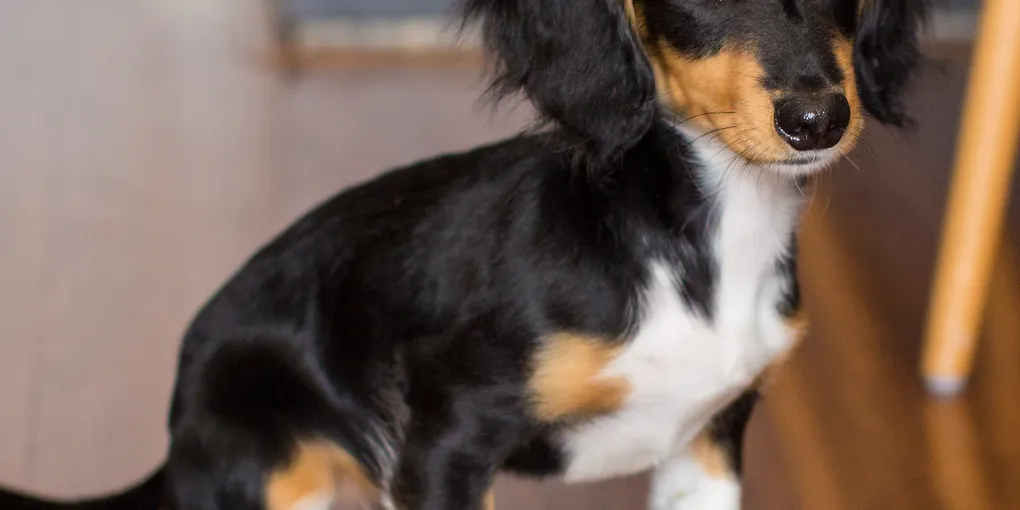
How to Introduce a Puppy to Older Dogs (Without the Chaos We Had)
When Milo came home, Rex tolerated him, Luna tried to mother him into the ground, Tank sat on him (accidentally). Here's the 14-day intro protocol that prevents full-house chaos.

When we brought Milo home, we already had Rex (2 years old, 80 lbs, calm but suspicious) and Luna (1 year old, 65 lbs, certain every small creature belongs to her). Within an hour I learned three things:
- Luna believed Milo was her newborn puppy and attempted to carry him by the scruff while she hummed softly.
- Rex took one look at Milo, walked into the other room, and refused to make eye contact for 3 days.
- A 6-week-old Dachshund is shockingly good at finding the one unmonitored corner of the house to pee in.
We also made every mistake you can make in the first 48 hours. Rex got possessive over his food bowl. Luna got exhausted from mothering. Milo got overwhelmed and spent an entire day hiding under the couch. I panicked. We reset.
Two weeks later, with a proper protocol, everything was smooth. A year later, Rex has informally adopted Milo as his anxious little cousin. Luna still thinks Milo is her son. Tank, who joined us a year after Milo, has his own “everyone’s fine but please give me space” policy.
Here’s the 14-day protocol I wish someone had handed me on day one.
Did You Know?
Research on dog introductions shows that 'neutral territory' first meetings reduce the likelihood of initial aggression by about 60%. Home introductions work fine too, but the resident dog's territorial instincts are at their strongest on day one. A 10-minute leash walk together on neutral ground (a nearby park or quiet street) is often all the difference between a good start and a tense one.
Before the puppy comes home (prep week)
Setup matters more than technique. Do this the week before.
1. Split the house into zones
You need to physically separate spaces. This means:
- Tall baby gates in two or three key doorways
- A dog exercise playpen set up in the main living area for the puppy’s “yard”
- A puppy safe zone (bathroom, spare room, or large crate) where the puppy can be when unsupervised
The older dog(s) should still have access to their normal favorite spots. You’re NOT rearranging their world. You’re carving out space for the puppy.
2. Gather separate resources
The #1 cause of first-week fights: shared resources. Before the puppy arrives, have:
- Separate food bowls in separate rooms (or at minimum separate corners)
- Separate water bowls (one for each dog, not shared)
- Separate beds
- Separate toy piles (you’ll mingle them later, but start separate)
- One chew for each dog (never just one that they have to “share”)
3. Tire the older dog(s) the morning-of
A tired dog is a tolerant dog. On pickup day, take your older dog(s) on a long walk or hike before bringing the puppy home. 45-60 minutes of real exercise. They should be slightly tired, not exhausted.
Day 1: The neutral meeting
Do NOT bring the puppy straight into the house. Before entering:
- Meet on neutral ground. A sidewalk in front of your house. A nearby park. Even your driveway.
- Both dogs on leash, two humans. One handler per dog.
- Let them see each other at distance first (15-20 feet). If both are calm, slowly close the distance.
- Allow sniffing, but KEEP MOVING. Both handlers walk in the same direction together, so the dogs are side-by-side but not fixated on each other. This converts a high-tension face-off into a calm walk-together.
- Keep it short. 5-10 minutes of walking together. Then go inside. Older dog first, puppy second.
When you enter the house, the puppy goes straight to the pen. Everyone gets a chew and space to decompress.
"Rex handled the neutral-territory meeting with Milo like a dignified senator meeting a chaotic intern. Deep sniff, one slow tail wag, a long sideways look at me as if to say 'I don't know why you did this, but I accept it for now.'"
— Rex's Dad
Days 1-3: Total supervision, physical separation when unsupervised
These three days set the pattern. Rules:
- Every interaction is supervised. No exceptions.
- Puppy is in the pen or crate when you can’t watch. Not for days at a time, but any time you’re cooking, showering, on a call, whatever.
- Short interactions (5-15 minutes), then reset. Both dogs go back to their spaces.
- Feed in separate rooms. This is non-negotiable for at least 2 weeks.
- No toys or chews during interactions yet. Eliminate resource-guarding triggers.
- Watch body language more than behavior. A stiff body, hard stare, closed mouth, or raised hackles on the older dog = end the interaction immediately, calmly.
Good signs:
- Loose body posture
- Play bow (older dog lowering front, butt in the air)
- Sniff-and-walk-away pattern
- Older dog moving near the puppy voluntarily
Warning signs (pause and reset):
- Snap or air-bite
- Growl that doesn’t stop when you move
- Body stiffening when the puppy approaches
- Older dog hiding or withdrawing for more than a few hours
- Puppy constantly trying to escape the space
Days 4-7: Short supervised freedom
If the first 3 days went well, gradually expand the puppy’s free access:
- 15-minute free periods together, supervised, during calm times
- Start training both dogs at the same time with separated spots, builds a “we work together” association
- Go on walks together. Huge for bonding. Older dog and puppy both see each other as part of the pack
Still:
- Separate feeding
- Separate sleeping areas
- Constant supervision during interaction
Days 8-14: Building routine
By now the older dog(s) should tolerate the puppy’s presence and maybe even seek it out.
Signs you’re doing well:
- Older dog chooses to lie near the puppy
- They play together (briefly) without your prompt
- The puppy has figured out when to give the older dog space
- Feeding in separate rooms still (but no panic from either)
Signs you need to slow down:
- Any fights (even brief ones)
- Older dog is losing weight or hiding frequently
- The puppy is becoming skittish or fearful
The resource guarding issue (critical)
This is where most multi-dog households blow up.
Never give one high-value item (a bully stick, a frozen Kong, a bone) without separating the dogs. Even the best-tempered older dog can be provoked into snapping when a clueless puppy charges at their bone.
Always feed in separate rooms or in crates for the first month minimum. We still feed Milo in the bathroom because Rex eats in the kitchen, it’s been 4 years and it’s just how we do it.
Rotate toys, don’t pile them. Two similar toys, one for each dog, in different areas. As they build trust you can mingle toys, but start separate.
Giving the older dog extra attention
This is the biggest emotional mistake new puppy parents make. They pour all their attention into the puppy and accidentally sideline the older dog.
Solution:
- Every time you pet the puppy, make sure the older dog gets attention in the next 5 minutes.
- First walk of the day = older dog only. No puppy. Preserve their one-on-one time.
- Evening cuddles = older dog first. The puppy gets their share, but the older dog knows their role in the household hasn’t been demoted.
- Training sessions with the older dog only at least once a week. Reinforces their specialness.
An older dog who feels secure in their bond with you is 10x more likely to accept the puppy than one who feels replaced.
When the older dog is very old or frail
Special considerations if your resident dog is 10+, arthritic, or has health issues:
- Puppies are exhausting. They will try to play constantly. Make sure the older dog has a permanent “off-limits to puppy” space.
- A tall baby gate around their bed creates a safe zone.
- Structured playtime separate from the older dog. Tire the puppy out with toys, walks, and training so they’re not pestering the older dog nonstop.
- Be realistic about the older dog’s tolerance. Some elderly dogs will never love a puppy, and that’s okay. Coexistence is a success.
The stuff to buy ahead
Everything you’ll actually need for the first month:
- Dog exercise playpen (8 panel), essential for puppy containment.
- Tall baby gates, at least 2 for doorways.
- Puppy crate (see my full crate guide)
- Enzymatic cleaner. Because accidents will happen (details in pet stain guide)
- Small training treats, need lots of these
- Separate food bowls, one per dog, ideally different colors so you don’t mix them up.
Don’t forget the puppy’s side
While you’re managing the introduction, don’t forget the puppy is a puppy. They need:
- Sleep, 16-18 hours a day. A rested puppy is a manageable puppy.
- A proper feeding schedule, see my new puppy checklist.
- Potty training. Consistent, patient, not rushed by the presence of older dogs.
- Socialization with humans AND with the older dogs. Both matter.
See my potty training guide for the fastest proven approach.
When to get professional help
If after 2-3 weeks you’re seeing:
- Repeated fights (not just corrections, actual fights)
- The older dog refusing to eat or drink
- Extreme avoidance lasting beyond a week
- The puppy showing signs of fear (cowering, running from the older dog)
- Any injury to either dog
Call a certified dog trainer or veterinary behaviorist. Early intervention in multi-dog dynamics is way cheaper and more effective than trying to fix an entrenched problem a year later.
The honest truth
Adding a puppy to a multi-dog household is disruptive. It will be hard for 2-3 weeks. You will second-guess yourself. One of the dogs will do something concerning in the first week. It’s normal.
Go slow. Keep them separated when you can’t watch. Feed them apart. Give the older dog(s) plenty of one-on-one time. And within 2-4 weeks, you’ll have a functioning multi-dog household instead of a chaotic one.
We now have four dogs. They mostly tolerate each other with occasional moments of genuine friendship. That’s the realistic success goal.
Related reading:
- New puppy checklist, everything you need
- How to potty train a puppy fast
- Best dog crates for every situation
- Dog separation anxiety solutions: sometimes the older dog develops anxiety from the change
Frequently Asked Questions
The real questions I get from other dog dads.
How long does it take for an older dog to accept a new puppy?
What if my older dog growls at my new puppy?
Should I let them fight it out?
My older dog is snapping at the puppy's face, what do I do?
Can I skip the separation phase if my older dog is super chill?
Sunday letter
One honest review. Every Sunday.
Plus the occasional photo of Rex destroying something he wasn't supposed to. About 400 words. Skip a week and I'll understand.
Disclosure: The Dog Dad Guide is a participant in the Amazon Services LLC Associates Program, an affiliate advertising program designed to provide a means for sites to earn advertising fees by advertising and linking to Amazon.com. As an Amazon Associate we earn from qualifying purchases, at no extra cost to you.
More Health & Wellness Guides
When Do Puppies Calm Down? The Honest Timeline (Breed by Breed)
Spoiler: not as early as you'd hope. Here's the real age-by-age timeline of when puppies actually mellow out, what changes when, and the trick that makes the wild months easier.
Dachshund Back Problems: How to Prevent IVDD (and What to Do If It Happens)
1 in 4 Dachshunds develops IVDD. Milo is 11 and still mobile because of these rules. Here's the full prevention protocol, plus the warning signs every Dachshund owner needs to know.
Border Collie Training: The 12 Things That Actually Worked (and Five That Didn't)
Border Collies aren't dogs. They're four-legged employees with a job description you have to write. Here's the training approach that works for the smartest breed alive.