How to Potty Train a Puppy Fast (The Method That Worked on All 4 of My Dogs)
I've potty trained 4 dogs from scratch. The method is simple, boring, and it works every single time. Here's the exact schedule, the mistakes I made, and the products that saved my carpets.
Let me tell you about the worst Tuesday morning of my life.
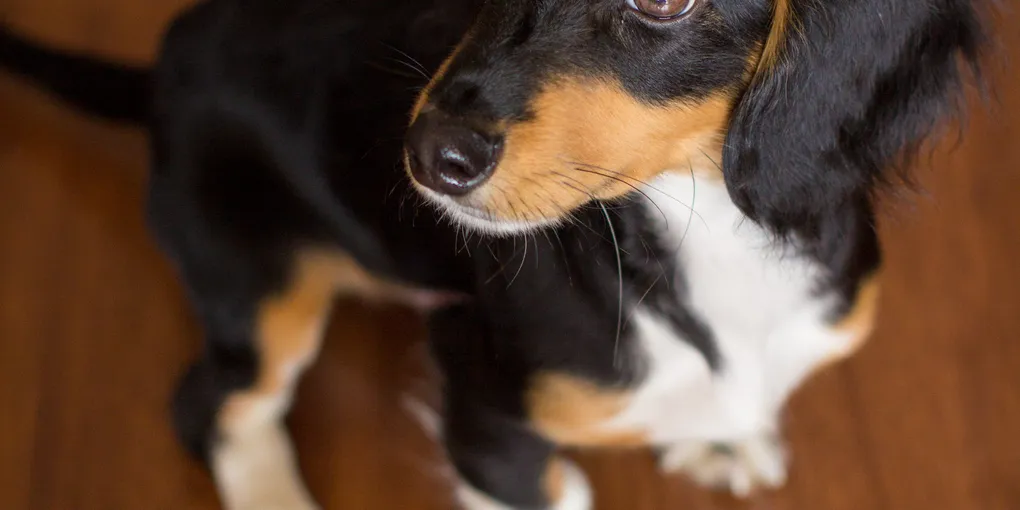
It’s 6:14 AM. I’m barefoot. Half asleep. Walking to the kitchen to make coffee like a zombie. And then I feel it. Warm. Wet. Between my toes. Milo, our 15-pound Dachshund, had left me a present right in the middle of the hallway. Not off to the side. Not near the door where it might make sense. Dead center. Like he measured it.
I screamed. My wife thought I was being attacked. Rex started barking. Luna started barking because Rex was barking. Tank knocked over a chair. Milo? Milo was sitting on the couch wagging his tail like he’d just done something wonderful.
That was week two of potty training Milo. “The Escape Artist” earned a second nickname that week. “The Carpet Destroyer.”
But here’s the thing. I’ve now potty trained all four of my dogs from scratch. Rex was my first. I made every mistake in the book with him. By the time I got to Tank, my fourth, I had the whole thing dialed in. He was fully house trained in under two weeks. No drama. No yelling. No stepping in surprises barefoot.
The method is boring. It’s not flashy. But it works every single time if you actually stick to it. So let me walk you through exactly what I do, the schedule I follow, the mistakes I made so you don’t have to, and the products that genuinely saved my sanity (and my carpets).
Did You Know?
Puppies can only hold their bladder for about one hour per month of age. So a 2-month-old puppy? Two hours max. A 4-month-old? About four hours. Knowing this one fact would have saved me three carpet stains with Rex.
Why Most People Fail at Potty Training
I’m going to be honest. When I got Rex as a puppy, I thought house training a puppy would just kind of… happen. Like eventually he’d figure it out. He’d see us using the bathroom inside and connect the dots. Right?
Wrong. So incredibly wrong.
Dogs don’t generalize. They don’t think “oh, the humans go in that white bowl thing, so I should go outside.” They think “I need to pee. This carpet feels nice. Done.”
The reason most people fail at potty training isn’t because they have a stubborn dog. It’s because they give the puppy too much freedom too fast. That’s it. That’s the whole problem. I did it with Rex. You’re probably doing it right now. And that’s okay. We’re going to fix it.
The 3 Rules of Potty Training (This Is the Whole Method)
Every successful potty training schedule comes down to three rules. That’s it. Three rules. Follow them and your puppy will be house trained. Skip any one of them and you’ll be cleaning pee out of your rug for months.
Rule 1: Supervise Like a Hawk
If your puppy is not in a crate, your eyes should be on that puppy. Period. Not “kind of watching from the other room.” Not “I can hear him so he’s probably fine.” EYES. ON. PUPPY.
When I got serious about potty training Milo, I literally attached his leash to my belt loop for three days straight. He went where I went. Kitchen. Living room. Bathroom. He sat outside the shower once while I washed my hair. Weird? Yes. Effective? Absolutely.
The moment you see sniffing, circling, or that little squat starting to happen, you scoop them up and RUN outside. Every single time.
"Milo once tried to sneak behind the couch to do his business. I caught him mid-squat and carried him outside like a football. He looked personally offended. But he never tried that spot again."
— Milo's Dad
Rule 2: Schedule Everything
Puppies are predictable. They pee after they wake up. They pee after they eat. They pee after they play. They pee when they’re excited. They basically just pee all the time. But there’s a pattern to it, and once you know the pattern, you can beat them to the punch every time.
I’ll give you my exact potty training schedule below. Stick to it like your carpets depend on it. Because they do.
Rule 3: Reward Like Crazy
When your puppy goes outside, you need to act like they just scored the winning touchdown in the Super Bowl. I’m talking treats. Praise. Happy voice. The whole performance.
I keep Zuke’s Mini Naturals training treats in a little bag clipped to my belt whenever I’m in active potty training mode. The SECOND the puppy finishes going outside, treat goes in the mouth. Not when you get back inside. Not five minutes later. Immediately. Right there on the grass.
With Tank, I used Zuke’s because they’re tiny enough that you can hand them out 30 times a day without overfeeding. They’re also soft, so a puppy can chew them fast and stay focused.
You can also grab Zuke’s on Chewy if you’re already placing an order there.
My Exact Potty Training Schedule (The One That Works)
Here’s the potty training schedule I used for all four dogs. Copy it. Set alarms on your phone. Put it on the fridge. Whatever you need to do to follow it.
Morning Routine
- First thing when puppy wakes up: Immediately outside. Not after coffee. Not after checking your phone. IMMEDIATELY. Pick them up out of the crate and carry them outside if you have to. I learned this the hard way when Rex peed on the kitchen floor at 6 AM because I stopped to start the coffee maker. Three extra steps. That’s all it took.
- After breakfast: Puppy eats, then goes straight outside within 10-15 minutes. Stand there and wait. Bring your coffee NOW.
- Mid-morning play break: Every 1-2 hours (depending on age), go outside. Even if they don’t seem like they need to. Go anyway.
Afternoon Routine
- After lunch: Same as breakfast. Eat, then outside within 10-15 minutes.
- After naps: Puppies nap a lot. Every time they wake up from a nap, straight outside. No exceptions.
- After play sessions: Running around gets everything moving. After any burst of energy or excitement, take them out.
Evening Routine
- After dinner: Outside within 10-15 minutes of eating.
- One more trip around 8-9 PM: Even if they went recently. One more for good measure.
- Right before bed: Last trip of the night. Stand out there until they go. Even if it takes 10 minutes. Luna used to just sit and stare at me. Like she was confused about why we were standing in the yard at 10:30 PM. But eventually she’d go, and then we could all sleep.
Middle of the Night (Yes, Really)
For puppies under 4 months, set an alarm. I know. I KNOW. But a 2-month-old puppy cannot hold it for 8 hours. It’s physically impossible. I did one middle-of-the-night trip at around 2-3 AM for the first month with each puppy. It’s brutal. It’s temporary. It’s worth it.
Did You Know?
Dogs have about 300 million scent receptors in their noses compared to about 6 million in humans. That's why if your puppy has an accident inside and you don't clean it with an enzyme cleaner, they can still smell it and will keep going back to the same spot. Your nose says clean. Their nose says bathroom.
The Products That Saved My Carpets (and My Marriage)
Accidents happen. Even with a perfect schedule, there will be days when your puppy outruns your reflexes. Here’s what you need on hand.
Nature’s Miracle Enzyme Cleaner
This is non-negotiable. I don’t care what other cleaner you have under the sink. Windex will not cut it. Regular carpet cleaner will not cut it. You need an enzymatic cleaner like Nature’s Miracle that actually breaks down the proteins in urine so the smell is truly gone. (I tested all the top options in my pet stain and odor remover guide.)
Remember that fun fact about dogs having 300 million scent receptors? If you clean an accident with regular soap, YOU can’t smell it anymore. But your puppy absolutely can. And they will go right back to that spot. I learned this with Rex. He had a “favorite corner” in the dining room for three weeks because I was cleaning his accidents with paper towels and Febreeze like an amateur.
Get the Nature’s Miracle. Soak the area. Let it sit. It works. You can also find it on Chewy.
If you want a backup option for quick spray-and-wipe situations, an enzymatic dog urine spray is great to keep in multiple rooms so you always have one within reach.
Bissell Little Green Portable Cleaner
Okay. This one. Let me tell you about this machine.
During Milo’s potty training, I was on my hands and knees scrubbing carpet stains so often that my wife thought I’d taken up a new hobby. Then she bought me a Bissell Little Green portable carpet cleaner and it changed everything.
It’s small. It’s portable. You fill it with water and cleaning solution, press it against the stain, and it sucks everything out. Pee, stain, smell, dignity of your carpet. All restored in about 60 seconds. I’ve used it on pee stains, mud tracks, and one memorable incident where Tank threw up an entire sock he’d eaten (different story, different blog post).
Also available on Chewy if you prefer shopping there.
Puppy Pee Pads
I’ll be honest. I’m not a huge fan of pee pads as a long-term solution. They can confuse dogs about where it’s okay to go. But for the first week or two, especially if you live in an apartment or it’s the middle of winter, Amazon Basics puppy pee pads are a lifesaver.
I used them near the back door as a “just in case” layer during the early days with each dog. The goal is to phase them out quickly. But having them there saves you from some floor damage while you’re getting the schedule dialed in.
Common Mistakes I Made (So You Don’t Have To)
Mistake 1: Punishing Accidents
Oh man. When I got Rex, my first dog ever, I did the thing. The thing that every old-school dog owner told me to do. When he had an accident inside, I rubbed his nose near it and said “NO” in my deepest dad voice.
Here’s what Rex learned from that: absolutely nothing about potty training. What he DID learn was to be afraid to pee in front of me. So instead of going in the hallway where I could see it, he started sneaking off to pee behind the bedroom door. Behind the couch. In the closet once.
I made the problem worse. Way worse.
If you catch your puppy mid-accident, a quick “ah ah!” and scooping them up to rush outside is fine. But yelling, rubbing noses, or punishing after the fact does literally nothing except scare your dog and damage your relationship. They have zero idea why you’re upset. Zero.
Mistake 2: Too Much Freedom Too Soon
Rex was about 12 weeks old and had gone three whole days without an accident. I thought we were done. I was so proud. I gave him free run of the entire house while I went to cook dinner.
He peed in the guest bedroom. Twice.
Puppies earn freedom gradually. Start with one room. Then two rooms. Then a hallway. If they go a full two weeks with zero accidents in their current space, THEN you expand. Not before. Patience is the whole game with how to potty train a puppy.
Mistake 3: Inconsistent Schedule
This one was my wife’s and my biggest issue with Luna. We’d follow the schedule perfectly on weekdays. Then the weekend would hit, and we’d sleep in. Walk her later. Feed her at random times.
Monday morning? Accident by the front door.
Dogs don’t understand weekends. Your potty training schedule has to be the same seven days a week. Yes, even Saturday. Yes, even when you’re tired. The good news is it’s temporary. Get through the first 3-4 weeks with a rock-solid schedule and you’re set for life.
Mistake 4: Not Cleaning Accidents Properly
I already covered this above, but it’s worth repeating because it was probably my single biggest mistake with Rex. Regular cleaners don’t work. If your dog keeps going in the same spot, it’s because they can still smell old accidents there. Get the enzyme cleaner. Use it every time. Soak the spot. Let it dry. Your future self will thank you.
"Tank was the easiest to potty train because by dog number four, I finally knew what I was doing. He looked at me like 'pee outside, get treat? Deal.' House trained in 12 days. I cried a little."
— Tank's Dad
What About Crate Training During Potty Training?
Crate training and potty training go hand in hand. Dogs naturally don’t want to soil their sleeping area. So a properly sized crate becomes your best tool when you can’t actively supervise.
The key word here is “properly sized.” The crate should be big enough for the puppy to stand up, turn around, and lie down. That’s it. If it’s too big, they’ll pee in one corner and sleep in the other. Ask me how I know. (Rex’s first crate was a large. He was a medium-sized puppy. He turned the far end into his personal bathroom.)
When I can’t watch the puppy, they go in the crate. When they come out of the crate, they go directly outside. This creates a simple pattern: crate, outside, supervised play, crate, outside, supervised play. Boring? Yes. Effective? Every single time.
If your puppy barks or whines in the crate, that’s a separate training challenge. A PetSafe Indoor Bark Deterrent can help with excessive crate barking while you work on crate training, but honestly, most puppies settle into the crate routine within a few days if you introduce it correctly.
The Timeline: How Long Does Potty Training Actually Take?
Everyone wants to know: how long until my puppy is potty trained?
Here’s my honest experience with all four dogs:
- Rex (German Shepherd): 6 weeks. But I was a complete beginner who made every mistake listed above. If I could redo it with what I know now, it would have been 2-3 weeks.
- Luna (Golden Retriever): 3 weeks. She was eager to please and picked up the pattern fast. Goldens are like that. She wanted to be a good girl so badly.
- Milo (Dachshund): 5 weeks. Dachshunds are notoriously stubborn about house training. Milo confirmed this. He knew what he was supposed to do. He just didn’t always feel like doing it. Classic Milo.
- Tank (Pit Bull mix): 12 days. By this point I had the system perfected. Also, Tank is weirdly motivated by food. One Zuke’s treat after peeing outside and he was locked in.
Most puppies with a consistent owner will be reliably house trained between 2-4 weeks. “Reliably” means occasional accidents might still happen for a month or two after, but the pattern is established and they get it.
Quick Troubleshooting
“My puppy keeps going in the same spot inside.” Enzyme cleaner. Right now. They’re smelling old accidents. Clean the spot with Nature’s Miracle or a similar enzymatic urine spray and soak it good. Then restrict access to that area for a while.
“My puppy goes outside but then comes in and pees immediately.” Stay outside longer. Sometimes they get distracted by smells, birds, leaves, existing, and forget to go. Wait until they actually go, reward them, THEN come inside.
“My older puppy was doing great and suddenly started having accidents again.” Regression is normal. Go back to basics. Tighten the schedule. More supervision. More trips outside. Think of it as a refresher course, not a failure.
“My puppy only goes on pee pads and refuses to go outside.” This is why I say use pads sparingly. Gradually move the pad closer to the door, then onto the porch, then onto the grass. Slow transition. They’ll get there.
The Bottom Line
How to potty train a puppy fast comes down to being more consistent than you’ve probably ever been about anything in your life. More consistent than your gym schedule. More consistent than your coffee order. For about 3-4 weeks, you need to be a potty training machine.
Supervise. Schedule. Reward. Those three things. That’s the whole method.
Stock up on enzyme cleaner for the accidents that will happen. Keep training treats in your pocket for the victories. And maybe invest in a Bissell Little Green because even after potty training is done, with four dogs, something is always happening to my carpets.
It’s temporary. It’s worth it. And one day you’ll realize your puppy hasn’t had an accident in weeks and you’ll feel like the greatest dog parent on the planet.
I still step carefully in hallways at 6 AM though. Some habits never die.
Frequently Asked Questions
How long does it take to potty train a puppy?
Most puppies with a consistent schedule will be reliably house trained in 2-4 weeks. My fastest was Tank at 12 days, and my slowest was Rex at 6 weeks (because I was making every mistake in the book). The key factor is your consistency, not the dog’s intelligence. Stick to the schedule, use enzyme cleaner for accidents, and reward every outdoor success with training treats.
Should I use puppy pads or go straight to outside?
I recommend going straight to outside if you can, because pads can confuse some puppies about where it’s okay to go. That said, if you live in an apartment or it’s freezing cold, puppy pee pads near the door are a totally reasonable short-term solution. The goal is to phase them out within 2-3 weeks by gradually moving them closer to the door and then outside.
What do I do when my puppy has an accident?
Stay calm and clean it up with an enzymatic cleaner — not regular soap, not Febreeze, not Windex. If you catch them mid-squat, a quick “ah ah!” and scooping them outside is fine. But never yell, rub their nose in it, or punish after the fact. They genuinely do not understand why you’re upset, and it will only teach them to hide when they need to go.
Can you potty train a puppy in 3 days?
Some trainers advertise “3-day potty training” methods, and while you can make major progress in 3 days of intense supervision and scheduling, a fully reliable puppy in 3 days is extremely rare. It took me 12 days with Tank using a near-perfect routine, and that was my fastest result over four dogs. Be suspicious of anyone promising overnight success — consistency over 2-4 weeks is what actually works.
Happy training, dog parents.
Disclosure: The Dog Dad Guide is a participant in the Amazon Services LLC Associates Program and the Chewy Affiliate Program, affiliate advertising programs designed to provide a means for sites to earn advertising fees by advertising and linking to Amazon.com and Chewy.com. As an Amazon Associate and Chewy Affiliate, we earn from qualifying purchases.