How to Bathe a Dog at Home Without Flooding Your Bathroom (A 4-Dog Dad's System)
Bathing one dog is manageable. Bathing four is a sport. Here's the system I built after years of wet chaos, plus the products that make bath time actually bearable.
Let me tell you about the afternoon I tried to bathe all four dogs in a row.
It was a Saturday. The dogs had found something dead in the backyard. I don’t know what it was. I don’t want to know what it was. All I know is that four dogs rolled in it with the kind of joy usually reserved for lottery winners. My wife looked at me from the back door and said, “They’re all yours.”
I started with Rex. 85 pounds of German Shepherd who treats bath time like a personal betrayal. Got him in the tub. Turned on the water. He immediately did the full-body shake. Water hit the ceiling. Water hit the mirror. Water hit ME directly in the face. I hadn’t even started shampooing yet.
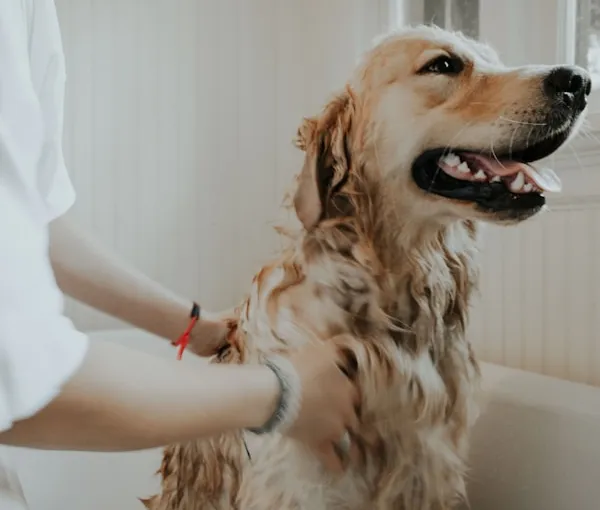
Luna was next. She’s the Golden Retriever. She LOVES baths. Just stands there wagging her tail, soaking wet, looking like a beautiful swamp creature. The only problem is her coat holds approximately 47 gallons of water and takes three hours to dry.
Then Milo. My 15-pound Dachshund. You’d think the smallest dog would be the easiest. Wrong. Milo escaped the tub while fully soapy, ran through the hallway, slid across the kitchen floor, and hid behind the couch leaving a trail of suds like a tiny wet slug. I found him 10 minutes later licking shampoo off his own belly.
Finally, Tank. My Pit Bull mix. 65 pounds of muscle who shivers like a Chihuahua the second water touches his skin. He stood in the tub shaking so hard you’d think we were in an earthquake. His big pittie eyes looked at me like I was committing a war crime.
By the end, my bathroom looked like a water park had exploded. There was fur stuck to every surface. I was soaked. My wife was laughing from behind her phone because of course she filmed the whole thing.
That was two years ago. Since then, I’ve built a system. Bath day is still chaotic, but it’s ORGANIZED chaos. And that makes all the difference.
Why Bathe Your Dog at Home?
Look, professional grooming is great. But at $50-80 per dog, bathing all four of mine at a groomer costs more than my car payment. I was dropping $250 every time everyone needed a bath. That’s not sustainable when you have four dogs and also enjoy eating food.
Home bathing saves serious money. It also gives you regular chances to check your dog’s skin, find lumps or bumps early, check their paw pads, and bond with your pup. Tank’s skin allergies? I caught them early because I was doing regular baths and noticed the redness before it became a full breakout.
Plus, once you get a system down, it honestly takes 20-25 minutes per dog. That’s manageable. Even with four.
Did You Know?
Dogs have a natural oil called sebum that protects their skin and coat. Over-bathing strips this oil, which is why most dogs only need a bath every 4-8 weeks. That 'doggy smell' between baths is actually healthy skin doing its job.
Step 1: Pre-Bath Prep (The Part Everyone Skips)
This is where 90% of dog parents mess up. They just throw their dog in water and start scrubbing. No. Stop. Prep is everything.
Brush first. Always. A good deshedding brush makes a huge difference here. Wet fur mats 10 times faster than dry fur. I learned this the hard way with Luna when I skipped brushing and ended up with a Golden Retriever covered in giant wet dreadlocks. Took me 45 minutes to detangle after the bath. Now I do a 5-minute brush before every single bath.
Gather your supplies BEFORE you start. Nothing worse than having a soapy dog in the tub and realizing the towel is in the dryer. Here’s my staging area checklist:
- Shampoo (and conditioner for Luna’s long coat)
- Rubber brush for lathering
- 2-3 towels per dog
- Treats (lots of them)
- Lick mat with peanut butter
- Cotton balls for ears
- Non-slip mat for the tub
Block the exits. Close the bathroom door. I also put a towel at the base of the door to absorb the water that WILL escape. If you have a Milo-type escape artist, consider having a second person on door duty.
Put cotton balls in their ears. Loosely. Not jammed in there. This prevents water from getting into the ear canal, which can cause infections. Rex got an ear infection once because I skipped this step. $120 vet bill for a piece of cotton I didn’t use. Lesson learned.
"The lick mat was a game-changer for Tank. He used to shake the entire time. Now he's so focused on peanut butter that he forgets he's wet. It's the only reason bath day is survivable for both of us."
— Tank's Dad
Step 2: Water Temperature (It Matters More Than You Think)
This is critical. Dogs have more sensitive skin than we do. What feels “nice and warm” to you can feel scalding to your dog. That’s why Tank shivered so much in the beginning. I was using water that was too hot, his skin was reacting, and then when I overcorrected with cold water, he was freezing.
The sweet spot: lukewarm. Test it on the inside of your wrist, like you would a baby bottle. It should feel barely warm. If you can’t tell if it’s warm or cool, that’s perfect.
For small dogs like Milo, I use the kitchen sink. It’s easier to control temperature, it’s the right height so my back doesn’t break, and there’s nowhere for him to escape. (Well, he still tries. But the odds are in my favor.)
For the big dogs, I use our bathtub with a detachable shower head. If you don’t have one, the Aquapaw bathing tool is incredible. It straps to your hand, connects to any shower head or hose, and gives you full control of water direction with one hand while you scrub with the other. It freed up my second hand and cut bath time by a solid 5 minutes per dog. Seriously one of the best purchases I’ve made for bath day.
Step 3: Lathering Up (There’s a Technique)
Don’t just squirt shampoo on your dog and hope for the best. There’s actually a method here.
Start from the neck and work backward. This is important because if your dog has fleas (hopefully not, but just in case), they’ll run toward the head when they feel water. A ring of shampoo around the neck creates a barrier.
Wet thoroughly first. And I mean THOROUGHLY. Double-coated dogs like Rex and Luna have a water-resistant topcoat. You think they’re wet, but underneath they’re still dry. Keep the water flowing until you can feel moisture all the way down to the skin.
Use a rubber brush for lathering. This was a revelation. The Kong ZoomGroom that I use for brushing? It’s AMAZING for bath time. The rubber teeth work shampoo deep into the coat, massage the skin, and loosen dead fur all at once. Plus my dogs think they’re getting a massage, not a bath. Milo goes full noodle mode when I use it. Just total relaxation.
Shampoo matters. Especially if your dog has sensitive skin. Tank breaks out in hives from harsh shampoos. After trying probably 8 different brands, I landed on Burt’s Bees Oatmeal Shampoo. It’s soap-free, pH balanced for dogs, and the colloidal oatmeal actually soothes irritated skin. Tank has had zero breakouts since we switched. ZERO. After years of fighting his skin issues, that felt like a miracle.
I use it on all four dogs now. It works great on every coat type, smells like honey (not that fake perfumey chemical smell), and it’s under $10 a bottle. For four dogs, I go through about one bottle a month.
The distraction trick: Stick a lick mat to the tub wall with some peanut butter or squeeze cheese on it. This is ESSENTIAL for anxious dogs. Tank went from full-body trembling to calmly licking peanut butter while I bathed him. Rex still hates baths, but the lick mat buys me about 8 minutes of cooperation before he starts the dramatic sighing. I’ll take it.
Did You Know?
A dog's skin has a pH between 6.2 and 7.4, which is more neutral than human skin (pH 5.5). Using human shampoo on dogs disrupts their skin's acid mantle, making them more vulnerable to bacteria, parasites, and viruses. Always use dog-specific shampoo.
Step 4: Rinsing (The Most Important Step)
I’m going to say something controversial: rinsing matters more than shampooing.
Leftover shampoo residue causes itching, flaking, and skin irritation. It’s the number one cause of post-bath scratching. If your dog goes crazy scratching after a bath, you probably didn’t rinse enough.
Rinse until you think you’re done. Then rinse for two more minutes. I’m not kidding. Run your fingers through the coat while rinsing. If it feels slippery or slimy, there’s still shampoo in there. Keep going.
For Rex and Luna with their thick double coats, rinsing takes longer than the actual shampooing. I spend a solid 5-7 minutes just rinsing each of them. It’s tedious. But the alternative is a dog who scratches himself raw for three days, and I’m not doing that to them.
Pro tip: lift up the legs and rinse the belly and armpits. Those are the spots everyone misses. Also between the toes. Shampoo loves to hide between toes.
"Luna is the only dog who actually enjoys the rinse phase. She'll stand there with her eyes half-closed, water running down her face, looking like she's at a spa. Meanwhile Rex is eyeing the door like he's planning a prison break."
— Luna's Dad
Step 5: Drying (Where Most People Give Up)
Here’s where the real work begins. You have a wet dog. Your bathroom is a disaster. You want to just open the door and let them air dry. I get it. I’ve been there.
Don’t do it. Here’s why.
A wet dog will immediately find the dirtiest spot in your house and roll in it. Rex’s favorite post-bath move is sprinting to the backyard and rolling in the dirt. Luna prefers the living room rug. Milo goes straight for the laundry basket. Tank finds the couch. They will undo everything you just did.
Towel drying comes first. Regular bath towels work but they get soaked immediately. The Absorber chamois towel holds significantly more water than a regular towel and you can wring it out and keep using it. One chamois towel does the work of three regular towels. With four dogs, that’s 12 fewer towels in the laundry. My wife appreciated that more than any gift I’ve ever given her.
For double-coated dogs, you need a dryer. Let me be honest. Air drying a German Shepherd or Golden Retriever takes HOURS. And a damp undercoat can develop hot spots or fungal infections. After Luna got a hot spot from incomplete drying, I invested in a Flying Pig high velocity dryer.
Is it loud? Yes. Did Rex hide behind the toilet the first time I used it? Also yes. But after some gradual introduction (treats, low settings, patience), all four dogs tolerate it now. It cuts drying time from “literally forever” to about 15 minutes for Rex and 20 for Luna. For Tank and Milo with their shorter coats, 5 minutes and they’re done. It also blows out loose undercoat, so you get a bonus deshedding session. Speaking of which, don’t forget that dental care is just as important as keeping them clean on the outside.
Never use a human hair dryer on high heat. It can burn their skin. If you don’t have a dog dryer, use a human one on the COOL or LOW setting only. And keep it moving. Don’t point it at one spot.
How Often Should You Bathe Your Dog?
This depends on breed, coat type, activity level, and skin condition. Here’s what works for my four:
Rex (German Shepherd, double coat): Every 6-8 weeks unless he rolls in something awful. His double coat is self-cleaning to a degree, and over-bathing strips the natural oils that keep it waterproof. During shedding season, I might bump it to every 4-5 weeks because baths help loosen the blowing undercoat.
Luna (Golden Retriever, long double coat): Every 4-6 weeks. Her long feathering picks up dirt, mud, and general outdoor funk faster than Rex. She also swims in every body of water she encounters, including puddles, so she gets extra rinse baths (water only, no shampoo) after those adventures.
Milo (Dachshund, short coat): Every 8-10 weeks. His short coat doesn’t hold much dirt and he’s mostly an indoor dog. Unless he finds something disgusting to roll in. Which he does with alarming regularity for a 15-pound dog.
Tank (Pit Bull mix, short coat, sensitive skin): Every 6-8 weeks, but ONLY with hypoallergenic shampoo. His skin is reactive and I’ve learned the hard way that more frequent bathing makes his issues worse. Between baths, I use gentle wipes for spot cleaning. If he gets genuinely dirty, I do a water-only rinse and save the shampoo for scheduled bath days.
General guidelines by coat type:
| Coat Type | Bath Frequency | Examples |
|---|---|---|
| Double coat | Every 6-8 weeks | German Shepherds, Huskies, Golden Retrievers |
| Short/smooth coat | Every 6-10 weeks | Pit Bulls, Beagles, Dachshunds |
| Long silky coat | Every 4-6 weeks | Yorkies, Maltese, Shih Tzus |
| Wire/rough coat | Every 6-8 weeks | Schnauzers, Terriers |
| Sensitive skin (any coat) | Every 6-8 weeks max | Use hypoallergenic shampoo only |
The golden rule: If your dog smells fine and looks clean, they probably don’t need a bath. Your nose is the best indicator. Well, your nose and your wife’s nose. My wife’s nose is more accurate than any vet diagnostic tool ever created.
The Dog Dad’s Bath Day System
After two years of trial and error, here’s my exact process for bathing all four dogs in one session:
1. Order matters. I go biggest to smallest: Rex, Luna, Tank, Milo. The big dogs take longest, so I start with them while my energy is high. Also, if Rex shakes and soaks the bathroom, it’s going to get wet anyway. Might as well let the big guy go first.
2. Assembly line prep. All supplies staged. All lick mats loaded with peanut butter. All cotton balls ready. Towels stacked. Dryer plugged in. I spend 10 minutes prepping so the actual bathing goes smoothly.
3. One in, one drying. While Rex is air drying in his crate (with a towel underneath), Luna’s in the tub. While Luna’s getting the blow dryer, Tank’s getting shampooed. Overlap saves a TON of time.
4. Post-bath treats. Every dog gets a high-value treat after their bath. This is non-negotiable. You want them to associate baths with good things. Rex gets a bully stick. Luna gets a stuffed Kong. Milo gets freeze-dried liver. Tank gets a dental chew. They sprint to their spots after bath time now because they know what’s coming.
Total time for all four dogs: about 90 minutes. That includes prep, bathing, drying, and cleanup. Compare that to $250+ at the groomer and 3 hours of driving. I’ll take the home bath every time.
Common Bath Time Mistakes
Let me save you the trouble of learning these the hard way:
Using too much shampoo. A quarter-sized dollop for small dogs, a golf-ball-sized amount for large dogs. More shampoo means more rinsing, which means more time, which means a more impatient dog.
Getting water in the ears. Ear infections are painful and expensive to treat. Cotton balls. Every time. No exceptions.
Bathing too frequently. I see people bathing their dogs weekly. Unless your vet specifically told you to do that, stop. You’re stripping their natural skin oils and probably making their coat worse.
Skipping the pre-bath brush. Mats. Tangles. Wet dreadlocks. Learn from my Luna disaster. Brush first. Always.
Forgetting to check water temperature mid-bath. Water heaters fluctuate. Check the temp periodically. I accidentally blasted Rex with cold water once because the heater cycled off. He gave me a look of such profound betrayal that I still feel guilty about it.
Rushing the drying phase. A damp dog is a smelly dog. And potentially a sick dog. Dry them properly. Yes, it takes time. Yes, it’s worth it.
The Final Word
Look, bathing dogs at home will never be a perfectly clean, organized process. There will be water on the ceiling. There will be fur in the drain. There will be a 15-pound Dachshund sliding across your kitchen floor covered in suds while you chase him in your underwear.
But with the right system and the right tools, it goes from a nightmare to something that’s genuinely manageable. Maybe even a little fun. (Luna would say it’s very fun. Rex would disagree. Strongly.)
The investment in a few good products pays for itself after two or three bath cycles compared to groomer prices. And the time you spend bathing your dog is time you’re bonding with them, checking their skin and coat health, and showing them that you care enough to do the messy work yourself.
Even when the messy work involves chasing a soapy Dachshund through your kitchen.
Happy bathing, dog parents.
Disclosure: The Dog Dad Guide is a participant in the Amazon Services LLC Associates Program and the Chewy Affiliate Program, affiliate advertising programs designed to provide a means for sites to earn advertising fees by advertising and linking to Amazon.com and Chewy.com. As an Amazon Associate and Chewy Affiliate, we earn from qualifying purchases.